27th Mar 2026
The Future of Human-Machine Collaboration in Marketing
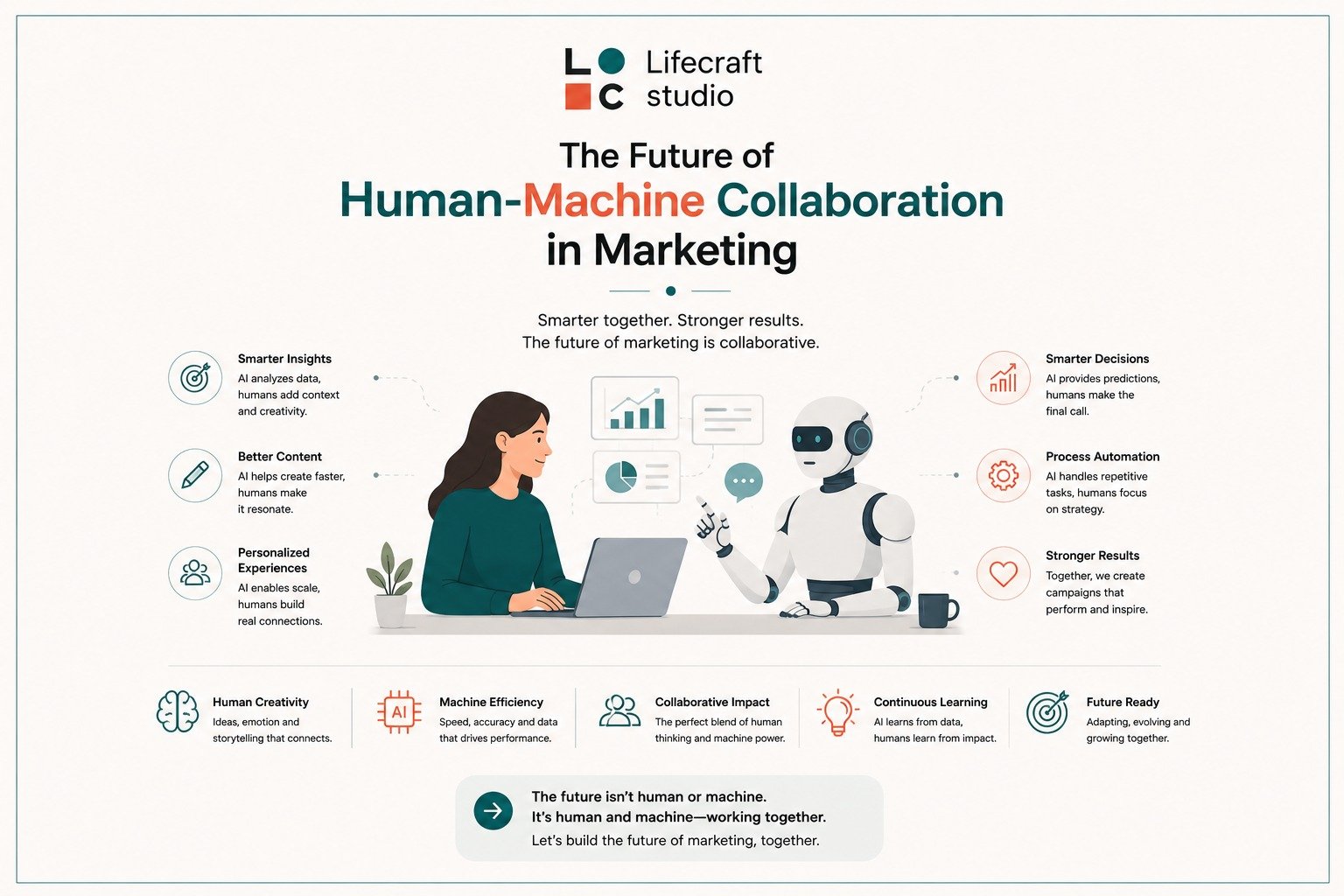
Introduction: The New Era of Marketing Marketing has always been driven by creativity, strategy, and understanding customer behavior. However, the rapid advancement of Artificial Intelligence (AI) is transforming how businesses approach marketing activities. From content creation and customer segmentation to campaign optimization and data analysis, AI is becoming an essential tool for modern marketers. While some fear that machines may replace human marketers, the future of marketing is not about competition between humans and technology, it is about collaboration. The most successful businesses will be those that combine human creativity with the efficiency and analytical power of AI.
How AI Is Transforming Marketing OperationsAI has already changed the way marketers gather and process information. Tasks that once required hours of manual effort, such as analyzing customer data, identifying trends, and generating reports, can now be completed in minutes. This allows marketing teams to spend less time on repetitive tasks and more time focusing on strategy, innovation, and building meaningful customer relationships. By automating routine processes, AI empowers marketers to work smarter and make faster, data-driven decisions.
Personalization Through Human-Machine Collaboration One of the most significant benefits of human-machine collaboration is improved personalization. Today's consumers expect brands to understand their needs and deliver relevant experiences across multiple channels. AI can analyze vast amounts of customer data to identify preferences, predict behaviors, and recommend personalized content. However, while AI can determine what customers may be interested in, human marketers are responsible for crafting authentic messages that resonate emotionally. The combination of machine intelligence and human empathy creates more effective marketing campaigns that drive engagement and loyalty.
The Role of AI in Content Marketing Content marketing is another area where collaboration between humans and AI is shaping the future. AI tools can assist with content research, keyword analysis, topic generation, and even drafting initial content outlines. These capabilities help marketers produce content more efficiently and identify opportunities that might otherwise be overlooked. However, creativity, storytelling, brand voice, and strategic thinking remain uniquely human strengths. Successful brands will use AI as a supportive tool while relying on human expertise to create compelling narratives that connect with audiences.
Smarter Advertising with AI and Human InsightThe future of advertising will also depend heavily on human-machine collaboration. AI-powered platforms can automatically optimize campaigns, adjust bidding strategies, and identify the most effective audience segments. These technologies improve campaign performance and reduce wasted advertising spend. Yet marketers must still define campaign objectives, understand customer motivations, and develop creative concepts that inspire action. Technology can optimize delivery, but human insight remains essential for creating memorable brand experiences.
Essential Skills for Future MarketersAs AI becomes more integrated into marketing workflows, new skills will become increasingly valuable. Marketers will need to understand how to use AI tools effectively, interpret AI-generated insights, and make informed decisions based on data. At the same time, skills such as creativity, critical thinking, emotional intelligence, communication, and adaptability will become even more important. Organizations that invest in both technical and human skills will be better positioned to succeed in an AI-driven marketplace.
The Importance of Trust and Ethical MarketingTrust and ethics will also play a critical role in the future of marketing. Consumers are becoming more aware of how their data is collected and used. While AI can provide powerful insights, businesses must ensure transparency, protect customer privacy, and maintain ethical marketing practices. Human oversight is essential to ensure that AI-generated recommendations align with brand values and customer expectations.
Building the Future Together Looking ahead, the future of marketing will not be defined by machines replacing humans but by humans and machines working together to achieve better results. AI will continue to enhance efficiency, improve personalization, and uncover valuable insights, while human marketers will provide creativity, empathy, strategic direction, and ethical judgment. Businesses that embrace this collaborative approach will be able to create stronger customer relationships, improve marketing performance, and stay competitive in an increasingly digital world.
Conclusion: AI as a Partner, Not a Replacement The organizations that thrive in the coming years will be those that view AI not as a replacement for human talent, but as a powerful partner that amplifies human potential. By embracing human-machine collaboration, marketers can unlock new opportunities for innovation, growth, and long-term success.
Frequently Asked Questions (FAQs) Q1. What is human-machine collaboration in marketing?Human-machine collaboration in marketing refers to people and AI working together to improve marketing outcomes. AI handles data analysis, automation, and optimization, while humans provide creativity, strategy, empathy, and ethical judgment.
Q2. How can AI improve marketing performance?AI can improve marketing performance by analyzing customer data, predicting behavior, personalizing campaigns, optimizing ad spend, automating repetitive tasks, and generating insights that help marketers make faster decisions.
Q3. What industries benefit most from AI-human collaboration in marketing?Industries such as healthcare, manufacturing, retail, finance, education, and professional services can all benefit from AI-human collaboration through improved personalization, automation, and customer engagement.
Follow us on


Other featured blogs
The Psychology Behind Great Graphic Design - What Makes Visuals Stick?
Digital Marketing for Small Businesses - Your Roadmap to Online Success

Building a Brand That Resonates - More Than Just a Pretty Logo

The Art of User Experience Design - Creating Websites People Love to Use