30th Mar 2026
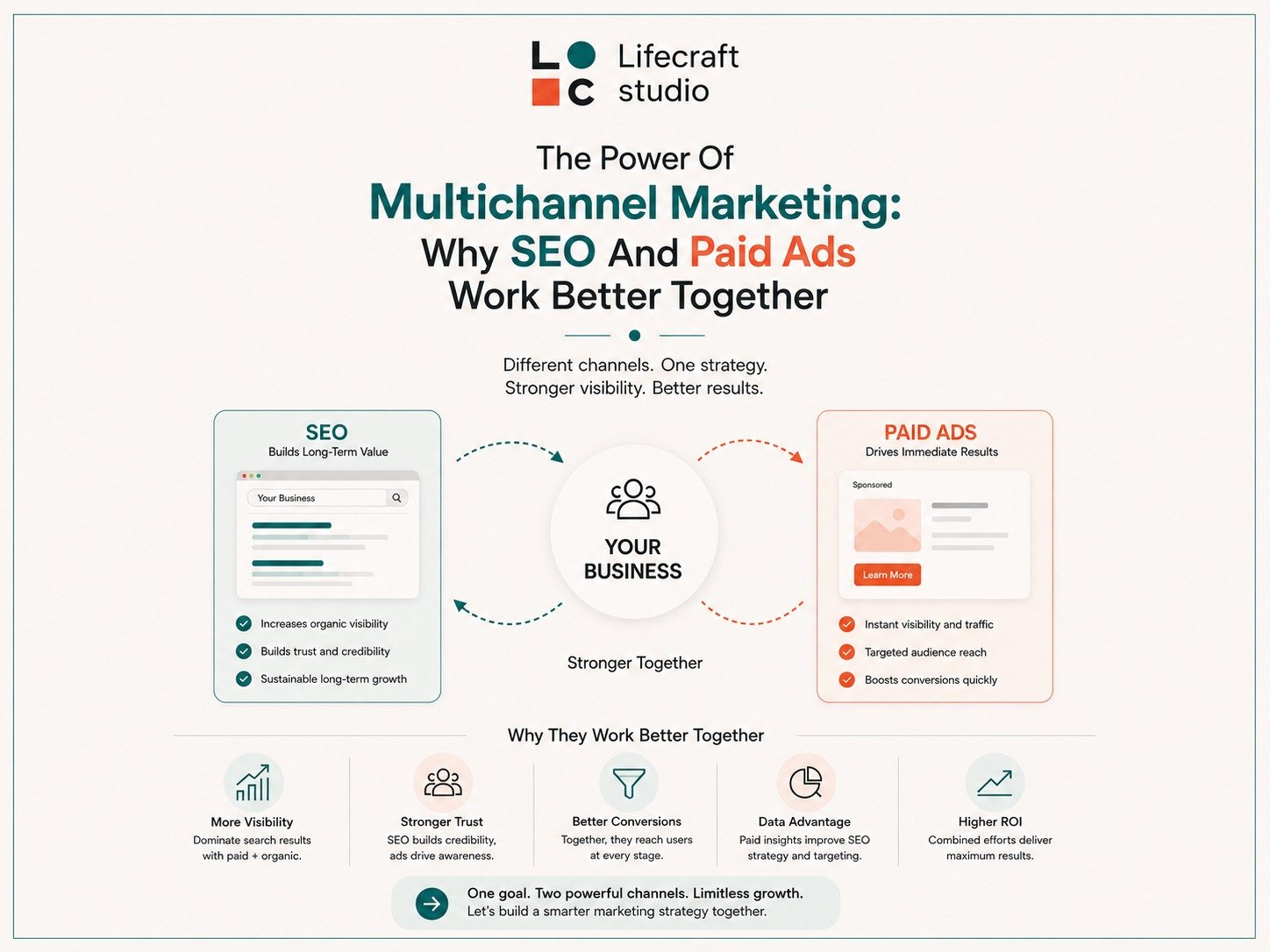
The Power Of Multichannel Marketing: Why SEO And Paid Ads Work Better Together
Introduction : In the digital marketing world, businesses often treat Search Engine Optimization (SEO) and Pay-Per-Click (PPC) advertising like bitter rivals. Teams get split into silos. Budgets are pitted against each other. SEO is championed as the “organic, long-term savior,” while paid ads are written off as an “expensive, short-term addiction.”
But here is the secret that top-performing growth agencies know: SEO and Paid Ads aren't competitors. They are teammates.
When you run them in isolation, you leave money on the table. But when you integrate them into a unified multichannel strategy, they create a powerful feedback loop that multiplies your visibility and slashes your customer acquisition costs.
Let's break down exactly why SEO and paid search work better together, and how a holistic strategy drives predictable revenue for scaling businesses.
1. You Dominate The Real Estate On The SERP The Search Engine Results Page (SERP) is prime digital real estate. If a potential customer searches for a high-intent phrase related to your business, showing up once is good. Showing up twice is devastating for your competitors.
By running Google Ads alongside an aggressive SEO strategy, your brand can capture the top advertising slot and the top organic listing simultaneously.
The Psychological Win. When a user sees your name twice on the same screen, it triggers an immediate subconscious trust signal. It tells the user, This brand is a major player in this space.
The Traffic Boost: Studies consistently show that having a paired paid and organic presence yields a significantly higher total Click-Through Rate (CTR) than relying on organic or paid clicks alone.
2. PPC Provides Instant Data To Fast-Track Your SEO Wins SEO is a marathon. It requires patience, strategic content mapping, and technical optimization to climb the organic rankings. The risk? Spending three months optimizing for a keyword, only to realize the traffic doesn't actually convert into sales. Paid ads act as your crystal ball. Because PPC delivers instant traffic, you can run a 30-day ad campaign targeting a specific bucket of keywords. By analyzing which ad headlines get clicked and which landing pages actually generate leads, you gain real-time data on exact-match user intent.
Instead of guessing what your audience wants, you can hand your SEO team a list of pre-validated, high-converting keywords to build long-term organic content around.
3. SEO Lowers Your Paid Ad Costs (The Quality Score Secret)Many business owners don't realize that your organic website health directly impacts your advertising invoice.
Google determines your ad costs using a metric called Quality Score. One of the heaviest components of this score is Landing Page Experience: how fast your page loads, how mobile-friendly it is, and how relevant the content is to the user's search query.
This is exactly where technical SEO steps in. When you optimize your site's architecture, clear out broken scripts, and structure your content beautifully for search engine crawlers, you are inherently building a high-scoring landing page.
The Bottom Line: Better SEO leads to a higher Quality Score, which directly lowers your Cost-Per-Click (CPC). Your paid budget literally goes further because your website is optimized.
4. You Cover The Entire Customer JourneyA buyer rarely searches for something once and buys it immediately. Their journey is fragmented:
Awareness Stage (Informational)
Consideration Stage (Comparison/Reviews)
Decision Stage (Transactional)
SEO is magnificent at catching top-of-funnel buyers. They are searching for informational guides, tips, or "how-to" articles. They read your blog, absorb your expertise, and leave.
But they aren't lost. Because they visited your SEO-optimized blog, your paid ad tracking pixels kick in. Later that afternoon, while they are looking to buy, they are hit with a highly targeted remarketing ad offering a specific discount or client case study.
SEO builds the initial relationship; PPC closes the deal.
Moving Beyond Silos: The Lifecraft ApproachAt Lifecraft Studio, we build digital strategies on a simple truth: data over guesswork. Managing your web design, your SEO, and your paid acquisition in separate corners creates disjointed messaging and wasted ad spend.
By aligning your organic foundation with your paid acceleration, you build a resilient marketing ecosystem that scales.
Frequently Asked Questions (FAQ)Q1. Should I stop running Paid Ads once my website ranks 1 organically?Generally, no. Even if you hold the top organic spot, competitors can still buy ad space above your listing, pushing you down the screen. Furthermore, data shows that running ads alongside top organic rankings generates a compounding effect, pulling in more total clicks than organic alone ever could. However, if a specific keyword has zero competitor ad bids, you can strategically scale back paid spend and rely on your free organic traffic.
Q2. How long does it take to see results from an integrated SEO and PPC strategy? You will see traffic and conversion data from your PPC campaigns almost instantly (within days of launching). Your SEO data will build steadily, typically showing noticeable organic ranking shifts within 3 to 6 months. The real magic happens around the 90-day mark, when the data sharing between both channels starts optimizing your total marketing budget.
Q3. Does spending money on Google Ads directly improve my organic SEO rankings? No, Google maintains a strict wall between paid advertising and organic algorithms you cannot pay your way into organic rankings. However, PPC indirectly supports SEO by driving brand awareness, increasing social shares, and bringing initial traffic to your site, which signals engagement to search engines.
Q4. We have a very tight budget. Should we start with SEO or Paid Ads?If you need immediate revenue and leads to survive next month, allocate budget to a hyper-targeted, small-scale Paid Ads campaign. If you are looking for long-term sustainability and want to reduce your reliance on paid acquisition over time, invest in SEO. For the best growth, even a 10% allocation of a small budget to test keywords via ads will massively accelerate your long-term SEO success.
Follow us on


Other featured blogs

The Psychology Behind Great Graphic Design - What Makes Visuals Stick?
Digital Marketing for Small Businesses - Your Roadmap to Online Success

Building a Brand That Resonates - More Than Just a Pretty Logo

The Art of User Experience Design - Creating Websites People Love to Use